
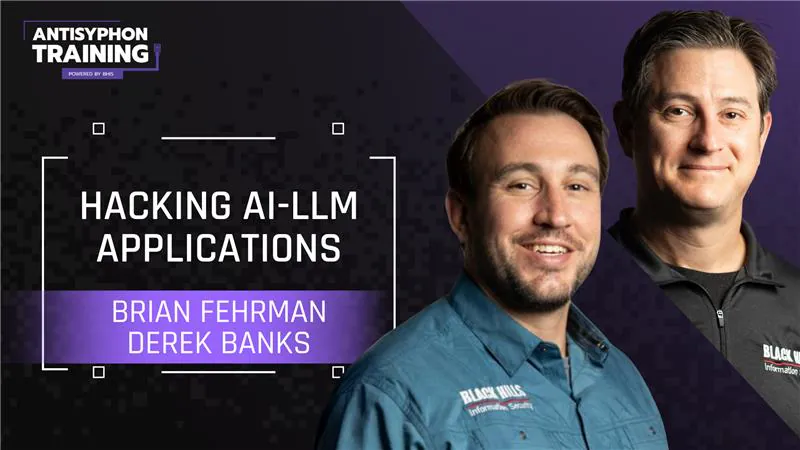
This workshop starts with AI-LLM application fundamentals, moving to a reference architecture based on Open WebUI, and then discusses related threats and vulnerabilities.
Course Length: 4 Hours
Includes a Certificate of Completion
Next scheduled date:
Notify me when available

About the Instructors


Brian Fehrman
Bio
Brian Fehrman has been with Black Hills Information Security (BHIS) as a Security Researcher and Analyst since 2014, but his interest in security started when his family got their very first computer. Brian holds a BS in Computer Science, an MS in Mechanical Engineering, an MS in Computational Sciences and Robotics, and a PhD in Data Science and Engineering with a focus in Cyber Security. He also holds various industry certifications, such as Offensive Security Certified Professional (OSCP) and GIAC Exploit Researcher and Advanced Penetration Tester (GXPN). He enjoys being able to protect his customers from “the real bad people” and his favorite aspects of security include artificial intelligence, hardware hacking, and red teaming. Outside of time spent working with BHIS, Brian is an avid Brazilian Jiu-Jitsu enthusiast, big game hunter, and enjoys home improvement projects.
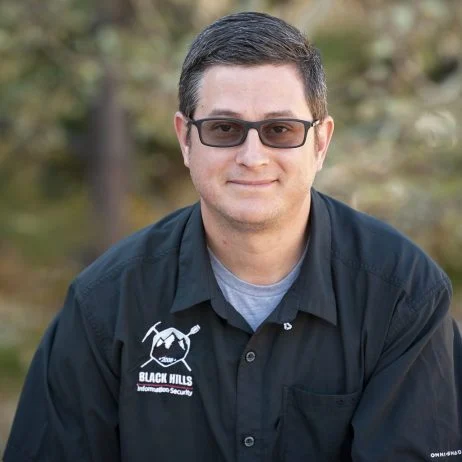
Derek Banks
"Security Analyst and Data Nerd"Bio
Derek Banks has been with Black Hills Information Security (BHIS) since 2014 as a security analyst, penetration tester and red teamer, and now fulfills a leadership role in the BHIS Security Operations Center (SOC). He has a B.S. in Information Systems and a M.S. in Data Science, as well as several industry certifications. Derek has experience in computer forensics and incident response, creating custom host and network-based logging and monitoring solutions, penetration testing and red teaming.
Related products
-

 John StrandLiveOD16 Hrs
SOC Core Skills
View Course This product has multiple variants. The options may be chosen on the product pageApr 6 - Apr 9
-

 Bill McCauleyLive4 Hrs
Workshop: Foundational Application Security Training
View Course This product has multiple variants. The options may be chosen on the product page -

 Multiple InstructorsLive16 Hrs
Offense for Defense
View Course -

 John StrandLiveOD16 Hrs
Active Defense and Cyber Deception
View Course This product has multiple variants. The options may be chosen on the product pageJun 29 - Jul 2