Sign Up for our Free One-Day SOC Summit Event March 25, 2026 Register Here

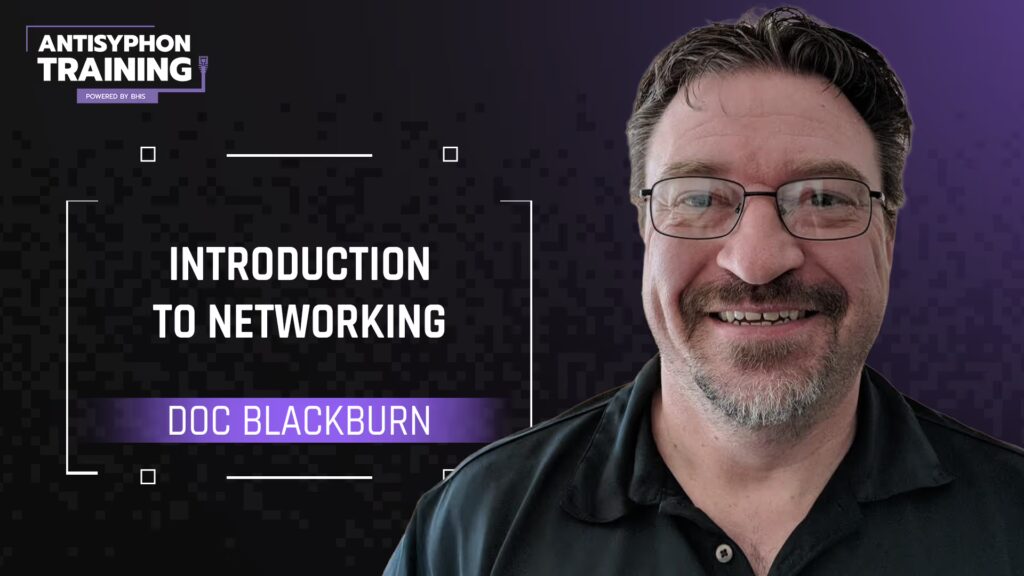
Introduction to Networking

Course Authored by .

This eight-hour, hands-on course provides IT and security teams with a practical introduction to computer networking.

On-Demand $295.00

Course Length: 8 Hours

Includes a Certificate of Completion


Description

This eight-hour, hands-on course provides IT and security teams with a practical introduction to computer networking. Participants will explore how devices communicate using TCP/IP, how packets move across networks, and how protocols like ARP, IP, TCP, UDP, and DNS operate. Guided labs using Wireshark allow students to observe real packet captures and understand how networking works in practice.

Syllabus

Foundations of Networking

  • What a network is and how devices communicate

  • LANs, WANs, and the global internet

  • The history and development of internet protocols

Communication Protocols

  • How protocols define structured communication

  • RFCs and the development of internet standards

  • Protocol layering concepts

The TCP/IP Model

  • The relationship between the OSI model and TCP/IP

  • Application, Transport, Internet, and Link layers

  • How messages travel down and up the protocol stack

Binary and Numbering Systems

  • Binary representation of data

  • Bits, bytes, and hexadecimal values

  • Why number systems are essential to networking

Network Addressing

  • MAC addresses and hardware identification

  • IP addresses and logical network location

  • Address Resolution Protocol (ARP)

Internet Protocol

  • IPv4 and IPv6 fundamentals

  • Packet structure and header fields

  • Routing packets between networks

Transport Protocols

  • TCP connection management and the three-way handshake

  • UDP communication and low-overhead messaging

  • Ports and service identification

Network Services

  • Dynamic Host Configuration Protocol (DHCP)

  • Domain Name System (DNS)

  • Network Address Translation (NAT)

Network Security Foundations

  • Why the original internet protocols lacked security

  • Common implications for modern cybersecurity defenses

Labs & Hands-On Exercises

Number Systems Lab
Students practice converting between binary, decimal, and hexadecimal to understand how computers represent network data.

Wireshark Packet Analysis
Students capture live network traffic and explore packet structures.

ARP and IP Analysis
Students inspect ARP broadcasts and IPv4 header fields to understand addressing behavior.

TCP and UDP Conversations
Students analyze TCP handshakes and UDP request/response traffic in packet captures.

Host Network Configuration
Students explore Windows network settings, DHCP assignments, and DNS lookups.

FAQ

Key Takeaways:

By completing this course, participants will:

  • Understand how devices communicate across networks using protocols.

  • Explain the TCP/IP stack and how it maps to real network communication.

  • Interpret binary, decimal, and hexadecimal values used in networking.

  • Analyze packet captures using Wireshark.

  • Identify how MAC addresses, IP addresses, and ports function together.

  • Recognize how services such as DNS, DHCP, and NAT support network operations.

  • Understand the fundamental design decisions that shaped the modern internet.

Who Should Take This Course:
  • IT professionals who want a clearer understanding of how networks operate.

  • Cybersecurity analysts who need to interpret network traffic and understand packet-level behavior.

  • Technical professionals seeking a practical introduction to networking fundamentals.

Audience Skill Level:

Beginner / Intermediate

About the Instructor

Pixel splash background
Bio

Doc Blackburn is a seasoned (old) cybersecurity instructor with decades of experience in IT, security, and compliance. Over his career, he has worked in many areas of IT, including systems administration, programming, network design, cloud services, web development, and risk management, bringing a broad technical foundation to his teaching. For more than 13 years, Doc has trained students and professionals to understand, implement, and maintain effective security practices, drawing on real-world consulting experience in compliance frameworks such as NIST SP 800-171, CIS Critical Controls, and MITRE ATT&CK. Known for making complex concepts accessible to all audiences, he blends technical depth with practical insights, preparing learners to address today’s evolving cyber threats.

On-Demand

Antisyphon's On-Demand classes give you flexible, self-paced access to the same high-quality training our live events are known for. Whether you're diving into forensics, cloud security, or offensive tooling, each course includes:

  • Full access to video recordings, slides, and downloadable resources
  • Hands-on labs and virtual machines to reinforce real-world skills
  • Cyber Range access for immersive practice (select courses)
  • Dedicated Discord support from instructors and peers
  • Certificates of participation upon completion

Start learning when it works for you!
No deadlines, no pressure. Just real, practical cybersecurity training on your schedule.

Purchase:
Content is loading, please wait.
Shopping Cart

No products in the cart.