
This class focuses on the demonstration of an Open Command Channel framework called “OpenC2RAT”, and then developing, enhancing, and deploying the “OpenC2RAT” command channel software into a target environment.
Course Length: 16 Hours
Includes a Certificate of Completion
Next scheduled date:
Notify me when available

About the Instructor

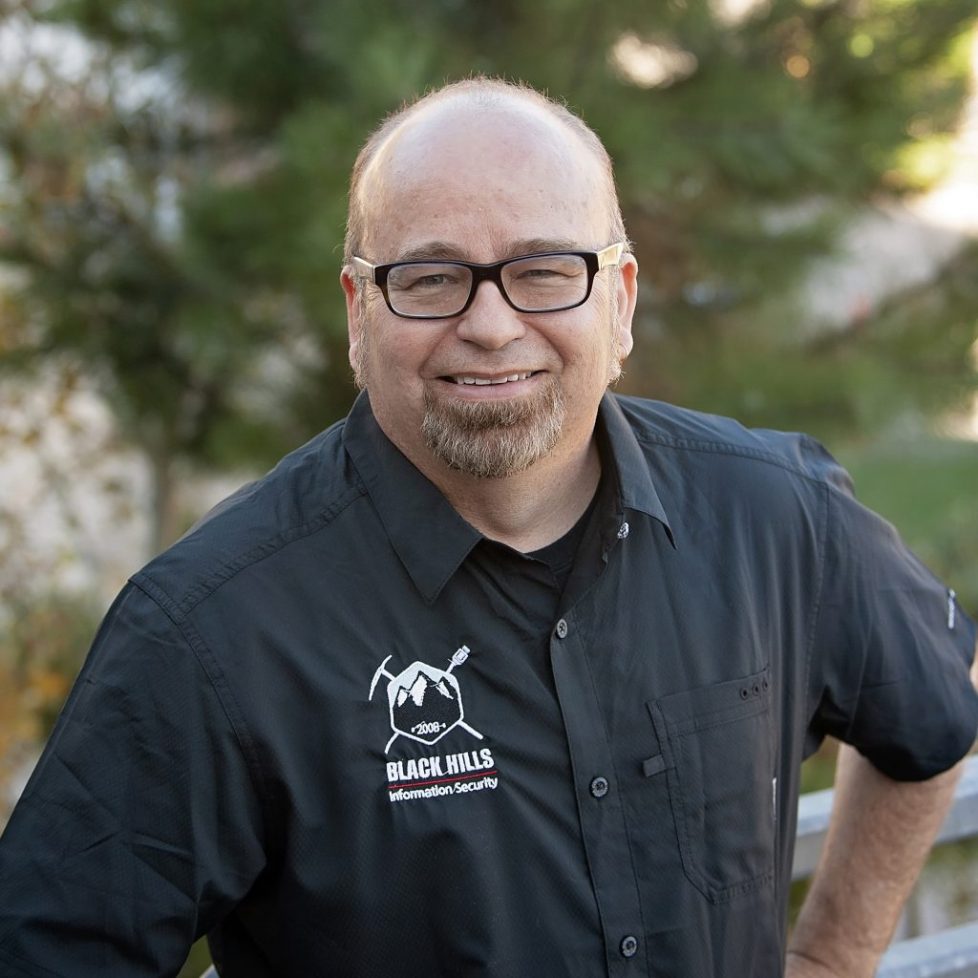
Joff Thyer
"I write malware, hack, and teach infosec for a living!"Bio
Joff Thyer has been a Security Analyst with Black Hills Information Security (BHIS) since 2013. He has an associate in Computer Science, a B.S. in Mathematics, and an M.S. in Computer Science, as well as several certifications. The best part of a penetration test for Joff is developing sophisticated malware that tackles defensive solutions, ultimately delivering exciting wins for company engagements.
Related products
-

 Kevin TackettLiveOD8 Hrs
Foundational Application Security Training
View Course This product has multiple variants. The options may be chosen on the product page -

 Multiple InstructorsLive16 Hrs
Offense for Defense
View Course -

 Bill McCauleyLive4 Hrs
Workshop: Foundational Application Security Training
View Course This product has multiple variants. The options may be chosen on the product page -

 Multiple InstructorsLiveOD16 Hrs
Enterprise Security for All
View Course This product has multiple variants. The options may be chosen on the product page