
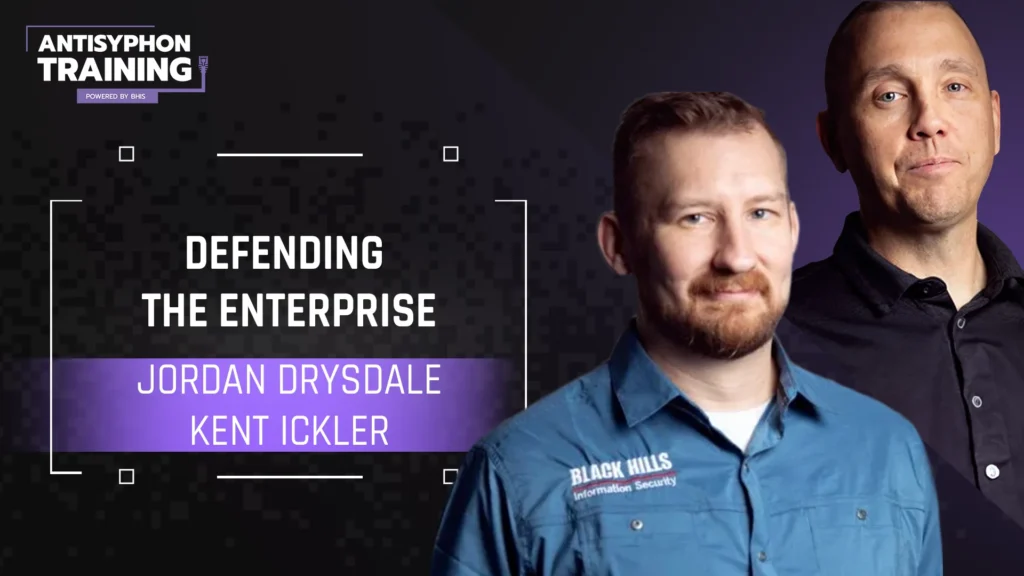
For new and legacy enterprises alike, Defending the Enterprise explores the configuration practices and opportunities that secure networks, Windows, and Active Directory from the most common and effective adversarial techniques.
Course Length: 16 Hours
Includes a Certificate of Completion
Next scheduled date:
Notify me when available

About the Instructors


Kent Ickler
Bio
Kent started his Information Technology career working for an Internet Service Provider supporting the MidWest’s broadband initiatives of the early 2000s. His interest in technology and business operations drove his career into working for multiple Fortune 500 companies and equipping their organizational leadership with business analytical data that would support their technology initiatives. With an understanding of Information Technology, System Administration, Accounting, and Business Law, Kent has helped businesses leverage technology for competitive advantage while balancing the risks associated with today’s dynamic network environments. Kent has been with Black Hills Information Security for three years in security and administration roles.

Jordan Drysdale
"Cybersecurity is not who I am, though I am quite passionate about it."Bio
Jordan Drysdale has been with the Black Hills Information Security (BHIS) tribe since December 2015. He is a Security Analyst, as well as a member of the systems administration team. Jordan came to BHIS with a strong background, including many years in networking tech support and engineering for HP, UNi, and Managed Services — he never stops learning and sharpening his skills.
Related products
-

 Alissa TorresLiveOD16 Hrs
Advanced Endpoint Investigations
View Course This product has multiple variants. The options may be chosen on the product page -

 Kevin TackettLiveOD12 Hrs
Practical OWASP TOP 10
View Course This product has multiple variants. The options may be chosen on the product page -

 Multiple InstructorsLive4 Hrs
Workshop: Hacking AI-LLM Applications
View Course This product has multiple variants. The options may be chosen on the product page -

 Bryan StrandLiveOD4 Hrs
Blue Team Foundations with Atomic Controls
View Course This product has multiple variants. The options may be chosen on the product page