
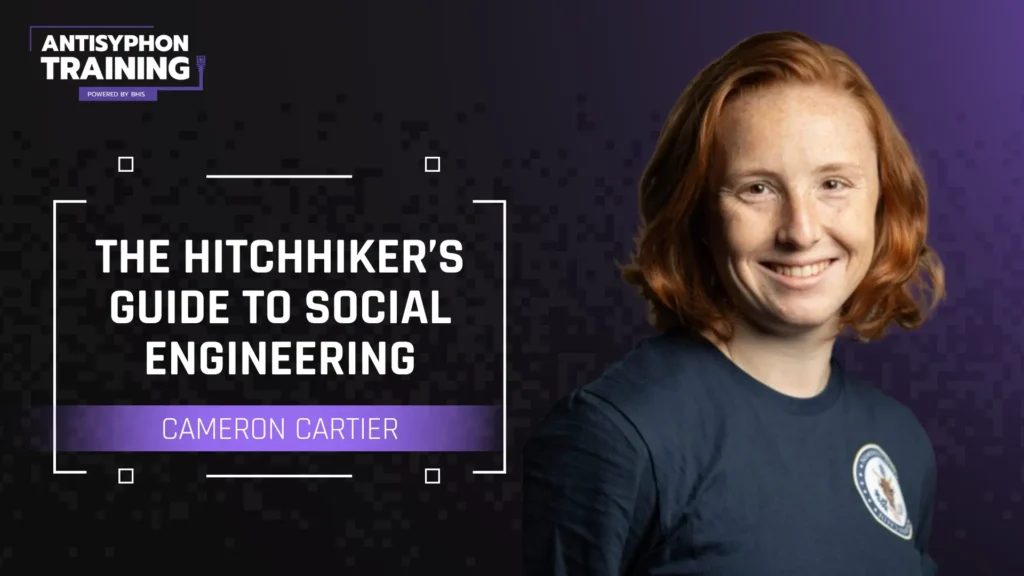
In this workshop, we are taking a “defense through offense” approach to illuminating the principles and techniques adversaries use to trick humans into helping them achieve their goals.
Course Length: 4 Hours
Includes a Certificate of Completion
Next scheduled date:

About the Instructor


Cameron Cartier
Bio
Cameron Cartier is a security consultant at Black Hills Information Security. She holds a master’s degree in computer science from the University of Utah where she studied Tor and other privacy-enhancing technologies. In her role at BHIS, Cameron specializes in social engineering, physical security testing, and web application exploitation. Outside of work, Cameron is an amateur cage fighter and rock climber.
Related products
-

 Bill McCauleyLive4 Hrs
Foundational Application Security Training with Bill McCauley
View Course -

 Troy WojewodaLive4 Hrs
Workshop: Foundations of Network Forensics and Analysis with Troy Wojewoda
View Course This product has multiple variants. The options may be chosen on the product pageJan 30
-
Benjamin BowmanLive4 Hrs
Workshop: Exploiting AI with Ben Bowman
View Course This product has multiple variants. The options may be chosen on the product page -
Bill McCauleyLive4 Hrs
Workshop: Foundational Application Security Training with Bill McCauley
View Course This product has multiple variants. The options may be chosen on the product page